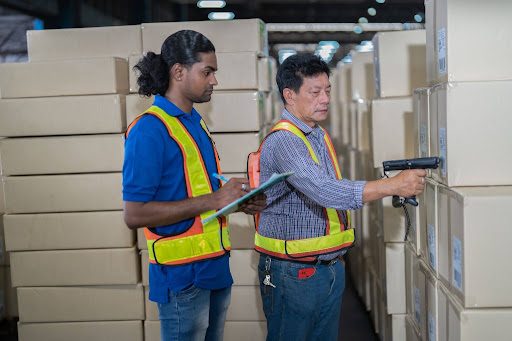
Managing your own stock may be effective at the initial phase of a business. At the beginning, a small team, a few orders, and a simple process of packing might seem to be manageable. However, with the expansion of the business, operations tend to be more challenging than anticipated. The increased number of products, increased number of parcels, increased coordination of courier, and increased customer expectations all begin to put pressure behind the scenes.
This is the reason why most businesses begin to learn more about ecommerce warehousing and fulfillment in Malaysia before they make the decision on whether they should handle everything internally or outsource some of the process. Third-party support is not always a convenience issue in the case of growing brands, but rather a way of creating a more reliable and smooth backend.
Why more brands are outsourcing fulfillment
With more orders, internal teams tend to start dedicating more time to activities that do not necessarily expand the business. The day can silently be taken over by packing, stock checking, dispatch planning and storage coordination. By this time, the business might be selling well but the business begins to slow down the operations.
Outsourcing assists in transferring that pressure. Businesses do not have to attempt to manage storage and fulfillment on their own, but can collaborate with a provider who already has the space, systems, and processes to manage daily order flow more effectively.
This may be particularly useful to ecommerce brands that may wish to concentrate more on sales, campaigns, product launches and customer retention without necessarily being dragged into the logistics day-to-day.
How third-party warehousing supports growth
Scale is one of the largest advantages of outsourcing. Businesses do not necessarily expand in a linear manner. There are months that are stable and those that go high due to campaigns, festive seasons or sales in the marketplace. Those changes may be easily absorbed in a third-party setup compared to an in-house team that has limited space and manpower.
This is one of the reasons why businesses begin to consider warehousing and fulfillment services when it becomes more difficult to handle internally. A more robust structure will allow the brands to have more space to expand without having to invest in their own warehouse, additional equipment, or a bigger team.
It also assists in establishing a more stable basis. The business can expand on a pre-existing fulfillment structure instead of having to rebuild the backend each time the volume of orders varies.
The operational benefits businesses often overlook
When people think about outsourcing, they usually think about storage space first. But the real benefit is often in the daily workflow.
A better warehousing and fulfillment setup can help with:
- cleaner stock organisation
- more accurate picking and packing
- better visibility across inventory movement
- smoother courier handover
- less pressure on internal staff
- more consistent order handling
These improvements may not always be obvious from the outside, but they affect the business every day. A smoother backend reduces avoidable mistakes and makes it easier to keep up with customer expectations as the brand grows.
Why flexibility matters in ecommerce
Flexibility is one of the most practical reasons to outsource. Not every business needs the same amount of space every month, and not every brand should commit to a fixed setup too early.
A flexible warehousing partner can support businesses during busy periods, campaign spikes, and growth phases without forcing them into a rigid structure. That matters because ecommerce businesses often change quickly. New products get added, order patterns shift, and storage needs rarely stay the same for long.
For many brands, this kind of flexibility is more useful than having a large warehouse on paper. What matters is having support that can adapt as the business evolves.
How to know when it is time to outsource
A lot of brands wait too long before reviewing their operations. They only start looking for external support when problems are already affecting customer experience.
It may be time to consider third-party warehousing and fulfillment if:
- stock is taking up too much room in your office, shop, or workspace
- your team spends too much time packing and dispatching
- order mistakes are becoming more common
- delivery coordination is getting messy
- growth is starting to feel harder to manage operationally
- you need a more organised setup for scaling
At that stage, outsourcing is not only about reducing work. It is about building a more dependable system behind the business.
Final thoughts
Third-party warehousing and fulfillment can make a real difference for businesses that are growing beyond a basic in-house setup. It helps create more structure, supports smoother daily operations, and gives internal teams more room to focus on the parts of the business that drive growth.
The best time to review your fulfillment model is often before operations become chaotic. A stronger backend does not only support efficiency. It also helps the business grow with fewer avoidable bottlenecks.