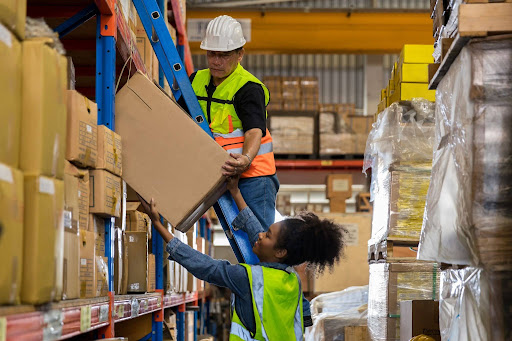
For many ecommerce businesses, storing products is only one part of the job. The next challenge is getting those products out efficiently. Once order volume increases, delivery planning, stock movement, and customer convenience start to matter much more.
That is why more businesses are reviewing their logistics setup and asking whether a proper warehouse distribution service can help them move faster, serve customers better, and reduce daily operational friction.
What warehouse distribution actually means
Warehouse distribution is about more than sending goods out from a storage point. It connects inventory, order flow, dispatch, and delivery support in a way that helps products move more efficiently to customers, retail points, or collection arrangements.
For ecommerce brands, this is especially useful because delivery expectations are high. Customers want a smoother buying experience, and businesses need a backend that supports that without becoming difficult to manage internally.
A well-organised distribution setup can help reduce delays, improve stock movement, and support more consistent order fulfillment from one stage to the next.
Why location plays a big role in distribution
A distribution center only works well if it is in the right location. When stock is kept too far from key customer areas, delivery becomes slower, more expensive, and harder to manage consistently.
For brands selling mainly in Kuala Lumpur and Selangor, a central location can improve more than just speed. It can also support easier stock movement, smoother courier coordination, and more convenient access for customers or retail partners.
This is why businesses should treat location as part of the distribution strategy, not just as a warehouse address.
Distribution is not only for large businesses
Some people assume distribution services are only relevant to major retail chains or high-volume national brands. But that is not always true. Even smaller ecommerce businesses can benefit from a better distribution structure once stock movement becomes harder to manage manually.
Many growing brands reach a point where their current setup works for storage but not for outbound flow. Orders increase, delivery expectations rise, and the team starts spending too much time coordinating dispatch.
That is often when outsourced distribution support starts to make more sense.
Better distribution improves the customer experience
Most customers do not think about distribution, but they experience the results of it every time they buy. If an order arrives late, collection is inconvenient, or delivery feels inconsistent, it affects how they view the brand.
This is why distribution is not only an operations issue. It is also a service issue. A smoother distribution process supports faster delivery, fewer delays, and a better overall buying experience.
Even small improvements behind the scenes can make the brand feel more reliable in the eyes of the customer.
Distribution works better when it connects with fulfillment
Distribution should not sit on its own. The strongest setup is one where storage, order handling, packing, and dispatch work together as one connected flow.
That is also why brands reviewing distribution often need to look at broader warehousing and fulfillment services in Malaysia as part of the same conversation. If one part of the backend is weak, it affects the rest of the process.
A more connected operation makes it easier to move from inventory intake to final handover without unnecessary delays or confusion.
Signs your business may need stronger distribution support
If your team is facing any of these issues, it may be time to review the current setup:
- delivery feels slower than it should be
- stock movement is becoming harder to manage
- dispatch takes too much manual coordination
- customers want easier pickup or faster local delivery
- the business is expanding into more coverage areas
- the current setup supports storage, but not efficient distribution
These are usually clear signs that the operation has grown beyond a basic in-house model.
What to look for in a warehouse distribution partner
A practical distribution partner should offer more than just storage space. Businesses should look for:
- strategic location
- smooth coordination between storage and dispatch
- support for ecommerce order movement
- flexibility for growing stock volume
- clean and organised handling flow
- options that improve customer convenience
The right setup should help the business operate more smoothly while giving customers a better delivery experience.
Final thoughts
Distribution is a backend function, but its effects are customer-facing. A stronger distribution structure can improve delivery flow, reduce daily friction, and support more consistent operations as the business grows.
For ecommerce brands in Malaysia, the right setup can make a real difference in speed, convenience, and long-term efficiency. And when distribution works hand in hand with fulfillment, the whole business becomes easier to manage.